

Why AI Agents Are Replacing Zapier and Traditional Automation in 2026
AI agents are transforming workflow automation by replacing rigid trigger-based systems with software that can evaluate context, coordinate operations dynamically, and reduce orchestration complexity across modern SaaS environments.
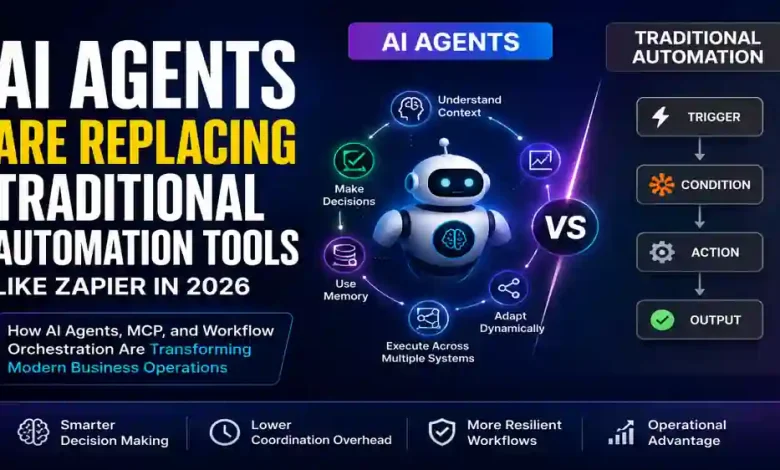
Why AI Agents Are Replacing Traditional Automation Tools Like Zapier in 2026
Last Updated: May 2026
AI agents are starting to change how modern companies handle operational workflows. Traditional automation platforms like Zapier, Make, and IFTTT were built around trigger-action logic: if something happens, run a predefined workflow. AI agents work differently. Instead of following rigid branches, they evaluate context and make workflow decisions dynamically.
The real problem inside most organizations is no longer connecting software tools. It’s coordinating work across fragmented systems, approval chains, APIs, and teams. AI agents are becoming a new coordination layer that helps companies reduce workflow complexity without constantly rebuilding automation logic.
Key Takeaways
- AI agents replace rigid workflow logic with contextual decision-making.
- Traditional automation platforms still matter as execution infrastructure.
- MCP is becoming an important interoperability layer for AI workflows.
- Most companies are reducing coordination overhead more than labor costs.
- Workflow orchestration is becoming a strategic operational advantage.
Table of Contents
- Why Traditional Automation Is Breaking Down
- The Shift From Rules to Workflow Compression
- AI Copilots vs AI Agents
- The Rise of the Coordination Layer
- How MCP Changes AI Workflows
- Workflow Economics and Operational ROI
- Gumloop vs n8n
- Why Many AI Workflow Pilots Fail
- Implementation Realities and Tradeoffs
- The Next Phase of AI Automation
- Frequently Asked Questions
Why Traditional Automation Is Breaking Down
Traditional workflow automation systems were built around predictable execution logic:
- trigger event
- conditional branch
- action execution
- status output
This works well for structured workflows like:
- CRM synchronization
- spreadsheet updates
- email notifications
- webhook routing
- database triggers
But modern operational workflows are rarely that clean.
Support teams deal with screenshots, voice notes, missing order data, inconsistent customer requests, and cross-platform coordination problems. Traditional automation systems struggle because every edge case has to be manually anticipated.
At scale, workflow complexity grows quickly.
Many operations teams eventually discover they are spending more time maintaining automation systems than improving them.
Small API changes can suddenly break entire approval chains.
Support workflows often fail when customer attachments arrive in unexpected formats or when upstream SaaS providers modify API schemas without warning.
This growing reliability problem is closely related to AI Reliability Engineering and the AGES framework, where resilience and observability become just as important as automation speed.
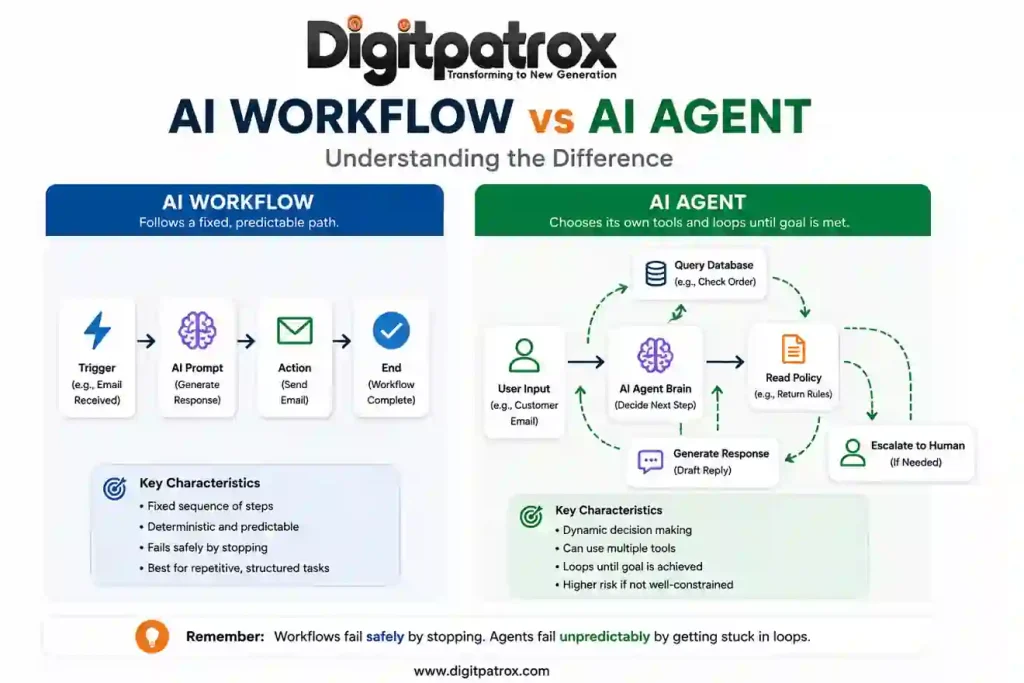
AI agents are not replacing SaaS tools. They are increasingly replacing the coordination logic between them.
Observed Reality
Most organizations implementing AI agents today are not dramatically reducing headcount.
What they are reducing is coordination latency between fragmented systems, overloaded teams, and slow operational processes.
The Shift From Rules to Workflow Compression
AI agents reduce workflow complexity by replacing rigid branching logic with contextual decision-making.
Instead of manually encoding every workflow path, AI systems increasingly evaluate operational context dynamically.
Traditional Automation Scenario
A support email containing the word “refund” might trigger:
- ticket classification
- tag assignment
- queue routing
- human escalation
AI Agent Scenario
An AI agent can:
- analyze attached product images
- check shipping delays
- retrieve order history
- cross-reference refund policies
- draft customer responses
- escalate only high-risk cases
In practice, this changes automation from a rigid rules engine into a system that can make workflow decisions dynamically.
For example, instead of routing procurement invoices through static approval trees, AI systems increasingly evaluate vendor history, anomaly patterns, budget thresholds, and escalation risk before deciding whether human review is necessary.
A mid-sized ecommerce support team might maintain dozens of Zapier branches just to manage refunds, shipping delays, fraud checks, and escalation paths. AI agents reduce some of this complexity by evaluating context dynamically instead of relying entirely on static routing rules.
This broader transition is also reshaping AI search infrastructure and semantic retrieval systems, where contextual understanding increasingly matters more than keyword matching.
AI Copilots vs AI Agents
AI copilots and AI agents solve different workflow problems.
| Capability | AI Copilots | AI Agents |
|---|---|---|
| Primary Role | Assist humans | Execute workflows |
| Interaction Style | Suggestion-based | Goal-oriented |
| Human Dependency | High | Moderate |
| Typical Use Case | Drafting and recommendations | Operational execution |
| Workflow Complexity | Low-to-medium | Medium-to-high |
Copilots improve productivity inside existing workflows.
AI agents increasingly coordinate workflows themselves.
This distinction matters because workflow coordination is becoming a major infrastructure layer inside modern SaaS ecosystems.
The Rise of the Coordination Layer
AI agents are not replacing workflow tools entirely.
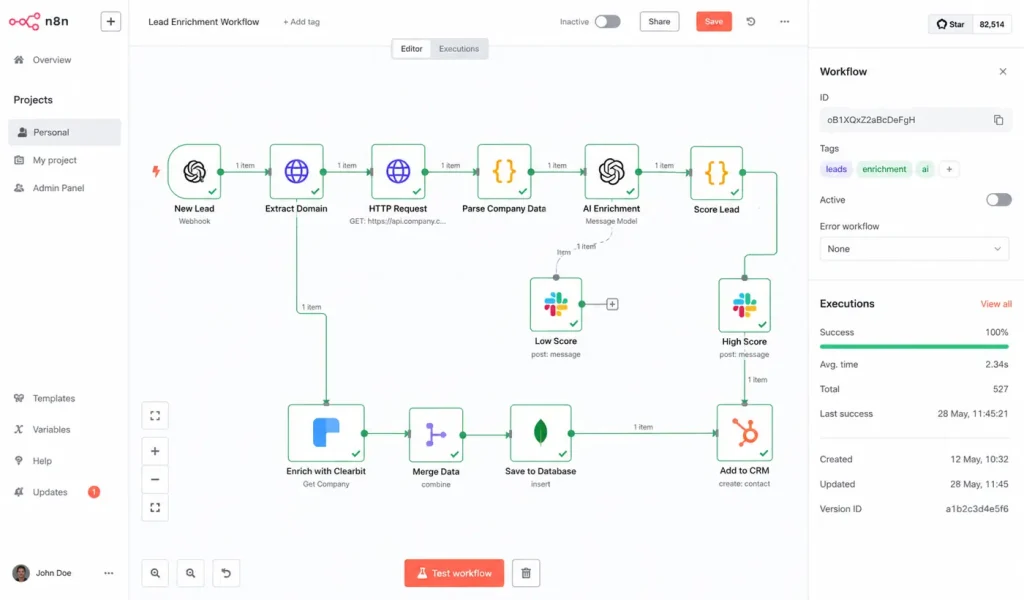
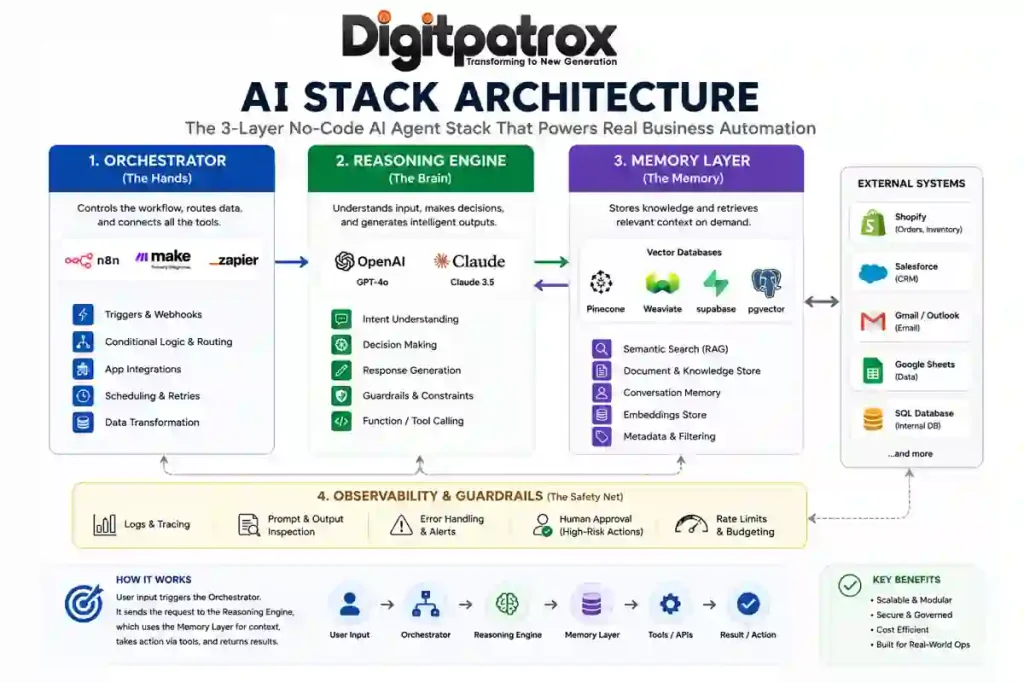
Most companies still rely heavily on platforms like Zapier, Make, and n8n for execution infrastructure.
What’s changing is the decision layer sitting above those systems.
The Modern AI Workflow Stack
- LLMs → contextual reasoning
- MCP → interoperability layer
- Vector Databases → memory and retrieval
- AI Agents → workflow coordination
- Observability Systems → monitoring and governance
- Zapier / Make / n8n → execution infrastructure
In practice, these systems tend to break less often than rigid trigger-based workflows because they can adapt to small operational changes dynamically.
For example, instead of hardcoding customer onboarding into dozens of workflow branches, companies increasingly use AI systems that adapt onboarding sequences based on customer type, account history, and support risk.
This shift toward orchestration infrastructure mirrors broader changes happening across AI-native operational systems and cognitive debt reduction.
How MCP Changes AI Workflows
Model Context Protocol (MCP) is emerging as a standardized way for AI systems to interact with tools and operational systems.
Traditional automation depends heavily on static mappings:
customer_emailuser_emailcontact_address
Small schema changes often break workflows completely.
MCP reduces some of this fragility by allowing AI systems to reason about operational intent instead of relying entirely on exact field mappings.
Many teams discover the hardest part of AI orchestration is not model quality. It’s inconsistent operational infrastructure across existing systems.
As orchestration layers become more autonomous, AI cybersecurity and governance infrastructure become significantly more important.
Operational Reality
Many “autonomous AI workflow” demos work only because the workflow environment is unusually clean and tightly controlled.
Real enterprise systems contain contradictory data, inconsistent permissions, incomplete records, and organizational ambiguity that AI systems still struggle to navigate reliably.
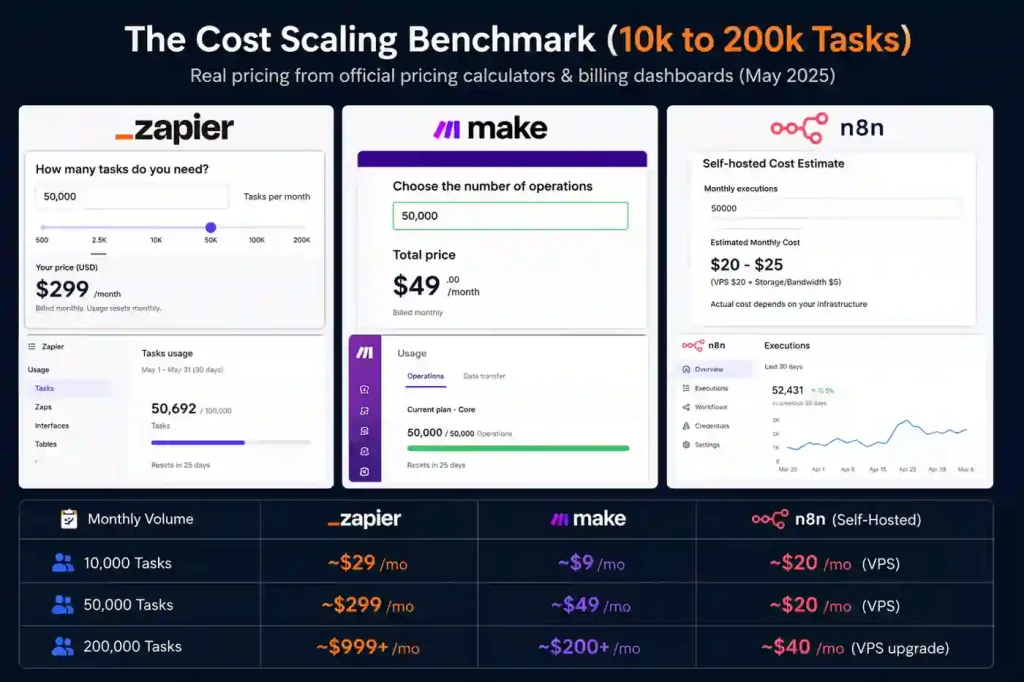
Workflow Economics and Operational ROI
The economics of AI agents are often misunderstood.
Most companies are not replacing entire teams with AI systems.
They are reducing coordination overhead.
Traditional Automation Costs
- manual maintenance
- workflow debugging
- branch complexity
- exception handling
- human escalation review
AI Workflow Advantages
- fewer workflow branches
- dynamic edge-case handling
- lower review overhead
- less coordination work
- simplified workflow management
Instead of employees constantly coordinating fragmented systems manually, AI layers increasingly absorb coordination work automatically.
The work itself does not disappear entirely.
It shifts toward governance, escalation management, monitoring, and operational oversight.
Companies that manage orchestration complexity well may gain a significant operational advantage over time.
Gumloop vs n8n
Gumloop
Gumloop is optimized for non-technical workflow teams that want rapid deployment without managing complex infrastructure.
Best For
- operations teams
- marketing automation
- support workflows
- rapid deployment
Tradeoffs
- less infrastructure control
- limited extensibility
- reduced customization depth
n8n
n8n operates closer to developer infrastructure and enterprise orchestration.
It prioritizes flexibility, extensibility, and self-hosting.
Best For
- developer teams
- enterprise orchestration
- self-hosted environments
- RAG workflows
- AI infrastructure customization
Tradeoffs
- higher complexity
- greater maintenance overhead
- steeper learning curve
This broader infrastructure specialization is similar to what we’re seeing across AI model ecosystems like ChatGPT, Claude, and Perplexity, where different systems increasingly optimize for different workflow behaviors.
Why Many AI Workflow Pilots Fail
One common problem is that companies overestimate AI reliability while underestimating operational cleanup.
Common failure points include:
- poor data quality
- unclear approval ownership
- inconsistent permissions
- weak observability
- fragmented documentation
- messy operational processes
Many organizations discover the hardest part of AI orchestration is not the AI model itself.
It’s cleaning up the operational systems surrounding it.
Implementation Realities and Tradeoffs
AI workflow systems still face important operational limitations.
- hallucination risk
- workflow reliability variance
- evaluation difficulty
- latency tradeoffs
- governance requirements
- human review dependencies
In practice, most successful enterprise deployments still rely on human approval layers for sensitive workflows.
For example, finance teams often require AI-generated procurement decisions to pass through confidence scoring systems before approval is granted.
The future is likely hybrid orchestration rather than fully autonomous operations.
The Next Phase of AI Automation
The next stage of AI workflow infrastructure is moving toward persistent operational coordination.
- memory-enabled agents
- multi-agent systems
- workflow-aware context layers
- persistent execution environments
- cross-platform orchestration systems
The result is software that can increasingly make coordination decisions on its own.
For example, instead of manually escalating delayed procurement approvals, future systems may evaluate supplier risk, internal approval latency, budget constraints, and compliance exposure automatically before selecting escalation paths.
This is less about replacing humans entirely and more about reducing the coordination burden surrounding complex operational systems.
Frequently Asked Questions
Are AI agents replacing Zapier?
Not entirely. AI agents increasingly replace workflow decision logic, while Zapier still remains valuable for execution infrastructure and integrations.
What is an agentic workflow in practice?
An agentic workflow is a system that can evaluate context dynamically instead of following fixed workflow branches. For example, an AI support workflow might analyze customer sentiment, order history, and attached screenshots before deciding whether to escalate a ticket.
What is MCP in AI workflows?
MCP is an interoperability layer that helps AI systems interact with operational tools contextually instead of relying entirely on brittle static integrations.
Who benefits most from AI orchestration systems?
Organizations managing complex workflows across multiple systems, approval layers, and operational teams benefit most from AI orchestration infrastructure.
Conclusion
AI agents are not simply another automation category layered onto SaaS infrastructure. They represent a broader shift toward software systems that can coordinate work more dynamically across fragmented operational environments.
The strategic advantage is not full autonomy. It is reduced coordination complexity.
Over time, companies that manage orchestration complexity well may gain a significant operational advantage.
About the Author
Digit writes about AI infrastructure, workflow orchestration, operational systems, agentic software, and enterprise automation architecture.